
Track Your Day.
Understand Your Parkinson’s.
Record your symptoms, medication status, ON and OFF periods, and daily notes in one simple diary—then create a clear report to discuss with your doctor.
Free to start · No credit card required · Your information remains private

Parkinson’s Can Feel Different From One Day to the Next
Symptoms, medication status, energy and mobility may change throughout the day. These details can be difficult to remember when your next appointment is still weeks or months away.
Symptoms May Fluctuate
Movement, stiffness, tremor, fatigue, pain and other symptoms may change from morning to evening or from one day to another.
Medication Status Matters
Noting when medication was taken and whether you feel ON, OFF or somewhere in between can add useful context to your symptoms.
Details Are Easy to Forget
A brief daily record can help you remember important changes, difficult days and questions you may want to discuss at an appointment.
You do not need to record everything. A short, consistent check-in can help create a clearer picture of your daily experience over time.
A Simple Daily Routine
You do not need to write long diary entries. A short daily check-in helps you build a useful record over time.
Complete Your Daily Check-In
Record how you feel, rate your symptoms and note your current medication status in about one minute.
See Your Entries Over Time
Review your symptom ratings, ON and OFF status and daily notes to see how your experience changes from day to day.
Prepare for Your Appointment
Create a clear report that can help you remember important changes and support a more focused conversation with your doctor.
The diary supports your medical conversations—it does not replace them. Your doctor will still consider your medical history, examination, medications and other clinical information.
Keep the Important Parts of Your Day in One Place
Record the information that matters to you without writing long diary entries. You decide how much detail to include each day.
Daily Symptoms
Rate symptoms such as tremor, stiffness, mobility, balance, fatigue, pain, sleep and mood.
Medication Status
Note whether your medication was taken, missed, delayed or changed during the day.
ON and OFF Periods
Record whether you feel ON, OFF or somewhere in between when completing your daily check-in.
Personal Notes
Add a brief note about falls, side effects, activities, difficult moments or anything unusual.
Changes Over Time
Review your entries using weekly and monthly charts to see how your recorded symptoms have changed.
Appointment Report
Create a clear report that summarizes your entries and helps you prepare for a conversation with your doctor.
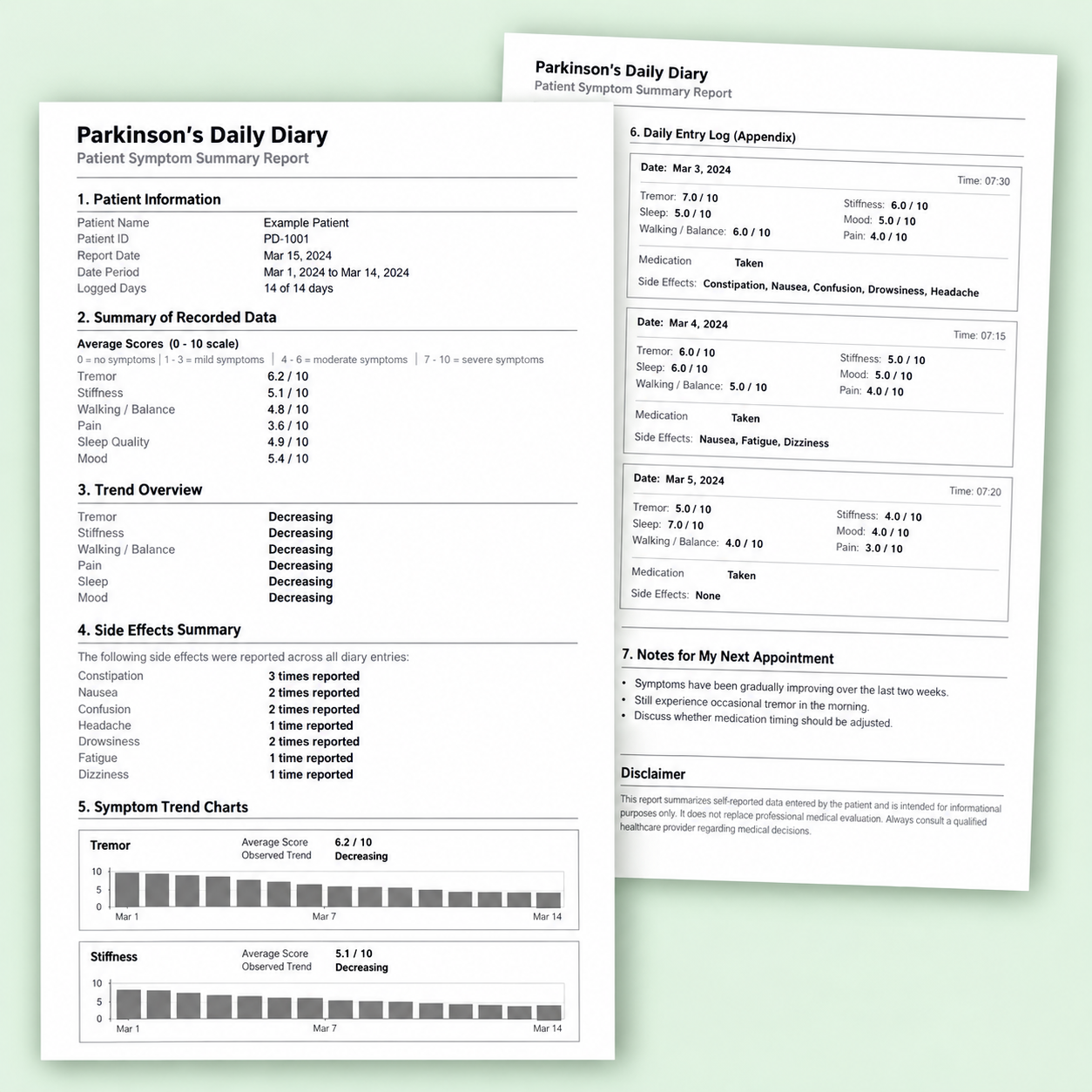
Example report shown with fictional information.
Bring a Clearer Picture to Your Doctor
Remembering several weeks of symptoms during a short appointment can be difficult. Your diary report organizes your recorded information so you can review it before the visit and focus on what matters most.
Review Your Recorded Symptoms
See average symptom scores and recorded trends across the selected reporting period.
Remember Important Details
Review medication status, side effects and daily notes that might otherwise be difficult to remember.
Prepare Your Questions
Use the appointment-notes section to list concerns or questions you would like to discuss with your doctor.
Download or Print the Report
Bring a structured four-page PDF instead of relying only on memory or scattered notes.
The report supports the conversation—it does not replace medical assessment, diagnosis or professional advice.
Simple, Flexible and Built Around You
The diary is designed to make daily tracking manageable—not add another complicated task to your day.
About One Minute a Day
Use simple ratings and short notes to complete your daily check-in without writing a long diary entry.
Use It on Your Device
Access your diary through a phone, tablet or computer using a web browser—there is nothing complicated to install.
Invite a Caregiver
If you choose, a trusted caregiver or family member can help you keep the diary updated and review your entries.
Your Information Remains Private
Your diary information is connected to your account and is not sold, published or licensed for advertising or marketing purposes.
You remain in control. Health-data processing is based on your explicit consent, which you can withdraw through your account. You can also request account deletion.
Questions About Using the Diary
Here are answers to some common questions about getting started and using the Parkinson’s Daily Diary.
How long does the daily check-in take?
Most people can complete the daily check-in in about one minute. You can rate your symptoms, record your medication status and add a short note only when needed.
Do I need to download an app?
No. The diary is currently a web application, so you can access it through a web browser on your phone, tablet or computer. You can also save it to your device’s home screen for easier access.
What information can I record?
You can record symptom ratings, medication status, ON and OFF periods, side effects and personal notes. You do not need to complete every field—record what is most useful for you.
Can a caregiver help me use the diary?
Yes. You can invite a trusted caregiver or family member to help keep the diary updated and review your recorded information.
Can I share my diary information with my doctor?
You can generate a four-page PDF report containing your recorded symptom scores, trends, side effects, daily entries and appointment notes. You can download, print or bring the report to an appointment.
Is the Parkinson’s Daily Diary a medical device?
No. It is a general software application for personal information management and lifestyle tracking. It is not a medical device and does not diagnose Parkinson’s, monitor a medical condition or recommend treatment changes.
Is my information private?
Your diary information is connected to your account and is not sold, published or licensed to third parties for advertising or marketing. Health-data processing is based on your explicit consent, which you may withdraw through your account.
Build a Clearer Record of Your Parkinson’s Days
Start with a short daily check-in. Over time, your entries can help you remember important changes, review your recorded symptoms and prepare more clearly for appointments.